Hospital Discharge Program hero background
Hospital Discharge ProgramMelbourne · Bendigo · Geelong

NDIS Hospital Discharge Program in Melbourne, Bendigo and Geelong.

From hospital to community, with the right supports in place.

If you are ready to leave hospital but still waiting for the right supports, Myxa coordinates your transition to Medium Term Accommodation, Supported Independent Living, or home.

Make a referralContact us

Why NDIS Hospital Discharge
Can Be Complex

You can be medically ready to leave hospital but still waiting for everything that makes community life safe and sustainable to be in place.

Changed support needs

01

Your support needs may have increased during your hospital stay. You might now need 24/7 support, High Intensity Support, or structured routines that were not part of your life before.

Housing and environment

02

Your previous home may no longer be suitable. You might be waiting for Medium Term Accommodation, Supported Independent Living, Specialist Disability Accommodation, home modifications, or equipment.

Complex presentations

03

Significant health conditions, behaviours of concern, dual diagnosis, or psychosocial disability mean your support team needs specific training, clear plans, and structured oversight.

NDIS funding and coordination

04

Your NDIS plan may need to change before you can move. That takes evidence and coordination between hospital teams, support coordinators, and the NDIS. Multiple people need to work together without a clear pathway.

Myxa's Hospital Discharge Program exists to bring all of this together, so you are not left waiting in hospital while everyone figures it out around you.

How the Hospital Discharge
Program Works

Our Hospital Discharge Program brings accommodation, staffing, and coordination together into one clear pathway from hospital to community living.

Referral and Quick Response

01

You, your support coordinator, your hospital team, or your family can contact us to discuss a referral. We ask key questions about your situation and support needs. We aim to respond within 24 to 48 hours with an initial view on whether the program is suitable and what the pathway could look like.

Information Gathering and Planning

02

If the program is suitable, we work with your hospital team and support coordinator to gather the information we need: discharge summaries, allied health reports, Behaviour Support Plans, medication information, and NDIS plan details. We focus on understanding you as a person, more than your file, so your transition plan reflects your goals, routines, and preferences.

Finding the Right Place and Support Team

03

Based on your needs, we identify the most appropriate path: MTA, SIL, or home. We match you with a support team trained for your specific needs, including High Intensity Support where required. The Myxa Framework ensures leadership, training, and operations are in place before you arrive.

Moving from Hospital and Settling In

04

We coordinate the day you leave hospital with your ward team and support coordinator. When you arrive in your new environment, your support team already understands your Support Plan, Behaviour Support Plan, and daily routines. The focus in the first weeks is on settling in, building trust, and refining your plan based on how you are going in real life.

Planning Your Next Step

05

If you move into MTA, we use your stay to gather evidence, build skills, and plan your longer-term home. We work with you, your family or representatives, your support coordinator, and your allied health team to plan what comes next: SIL, returning home, or transitioning to another provider.

Pathways from Hospital

Every discharge is different. Your pathway might include one or more of the following:

Hospital to MTA

01

You move from hospital into Medium Term Accommodation for up to 90 days while longer-term arrangements are finalised. During your MTA stay, you receive day-to-day support and, where needed, High Intensity Support. We use this time to understand your needs in a real home environment, refine your Support Plan, and gather evidence for NDIS plan reviews.

Hospital to SIL

02

If your long-term housing and supports are already in place, you may move directly from hospital into a Supported Independent Living home. Your support team is prepared before you arrive, and the focus is on stability and building new routines in your long-term home.

Hospital Back Home

03

Some participants return to their own home or a family home. In these situations, we can provide Core Support and, where funded, High Intensity Support so you have the day-to-day support you need to live safely in the community.

How To Refer To The
Hospital Discharge Program

You do not have to manage this alone. Referrals and enquiries can come from the participant, their family or representatives, their NDIS support coordinator, hospital social workers, discharge planners, disability liaison staff, or allied health professionals.

What happens when you contact us

You share a brief overview of the situation, including the current hospital, support needs, and NDIS status. We aim to respond within 24 to 48 hours to let you know whether the program is suitable, what the next steps are, and what information we will need. With consent, we then gather detailed information to confirm whether we can safely support the discharge and which pathway is most appropriate.

Preparation time varies depending on complexity, property availability, and the level of staff training required. We are always honest about what is realistic and keep you informed along the way.

Talk Early

If you are a support coordinator or hospital staff member and you are unsure whether a referral is appropriate, you can still contact us for a discussion. We would rather talk early and give you a clear answer quickly than leave you waiting.

What This Program Is Not

Where we can provide safe, appropriate support, we commit to thorough preparation and follow-through. Where we cannot, we tell you clearly and quickly so you are not left waiting.

This program does not provide

01

Myxa is a registered NDIS disability support provider, not a hospital ward, rehabilitation unit, or sub-acute service.

Medical treatmentNursing servicesAllied health therapyMental health treatmentRehabilitation

What Myxa does

02

We implement the plans and health management strategies designed by your clinical and allied health teams, under their guidance.

Frequently Asked
Questions

Myxa Logo
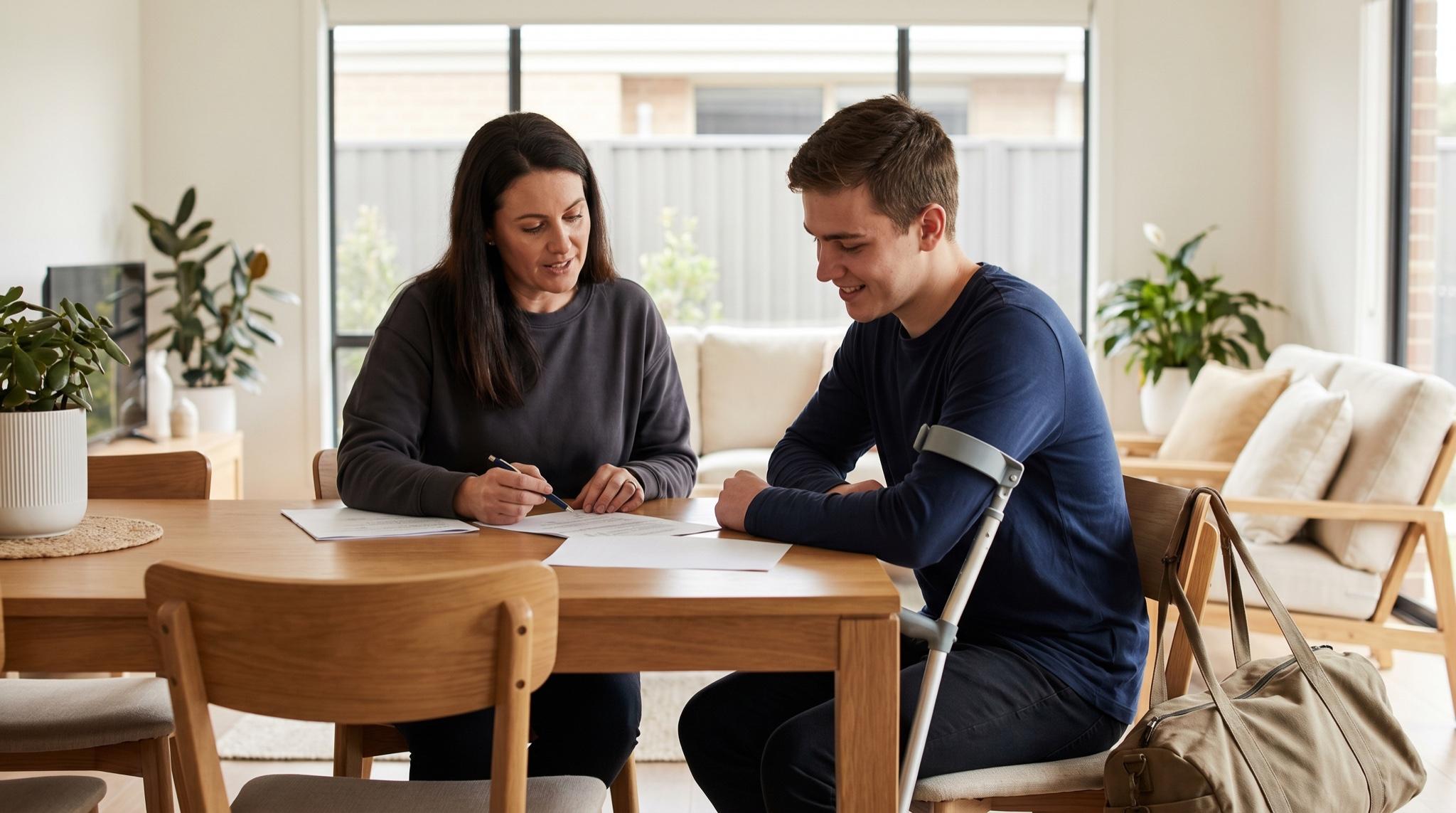
Myxa support worker walking a young adult NDIS participant through a printed support plan at a sunlit dining table in his home after a hospital discharge, with a duffel bag on the floor and a forearm crutch on his arm

Ready to Discuss a Hospital Discharge?

Whether you have an urgent discharge, a complex situation that needs coordination, or you want to understand what is possible, we are here to talk.

Myxa