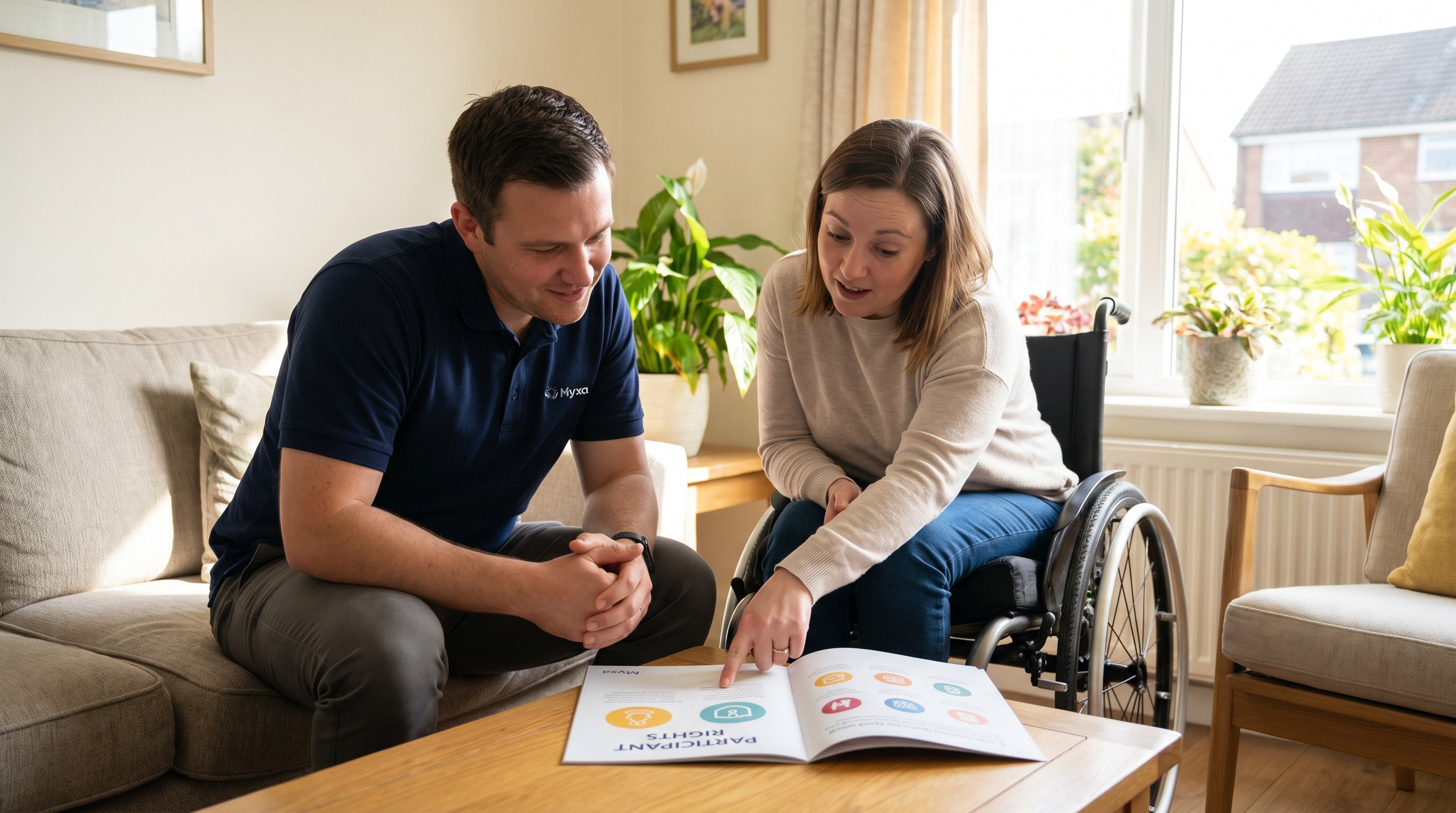
Positive Behaviour Support hero background
Positive Behaviour SupportMelbourne · Bendigo · Geelong

Positive Behaviour Support (PBS) in Melbourne, Bendigo and Geelong.

Person-centred, evidence-based clinical support that builds on individual strengths, reduces restrictive practices, and improves quality of life.

Independent clinical PBS delivered by registered Behaviour Support Practitioners across Victoria.

Who We Support Through PBS

Positive Behaviour Support is for NDIS participants who experience behaviours of concern, or whose current support arrangements are not meeting their needs.

Participants We Commonly Support

We work with participants who may be experiencing:

Intellectual disabilityAutismAcquired brain injuryPsychosocial disabilityComplex traumaForensic backgrounds

Every person's experience is different, and our approach reflects that. PBS is built around the participant's goals, environment, relationships, and daily life.

Our role is to understand what is driving behaviour, identify practical strategies, and help the whole support network respond more effectively and consistently.

When PBS May Be the Right Fit

PBS is not only for crisis situations. It supports participants across the spectrum of need, from those who would benefit from early intervention and positive strategy development through to those with complex, long-standing support requirements.

PBS focuses on understanding why behaviours of concern occur. We build environments, routines, and strategies that support the participant to live well, rather than simply responding to behaviour in the moment.

Support is shaped around the participant's real-world context. Whether someone is navigating a new living arrangement, transitioning from hospital, or working toward greater independence, PBS provides the clinical foundation for meaningful change.

How PBS withMyxa Works

Positive Behaviour Support follows a structured, evidence-based process. Each step builds on the one before, with the participant and their support network involved throughout.

1

Referral and Intake

The process begins with a referral, usually from a Support Coordinator, family member, or allied health professional. Our intake team reviews the referral, confirms NDIS funding, and assigns a registered Behaviour Support Practitioner. We aim to make initial contact within five business days of receiving a complete referral.

2

Functional Behaviour Assessment

Your Behaviour Support Practitioner conducts a Functional Behaviour Assessment (FBA). This involves gathering information from the participant, their families and representatives, and support teams to understand the function of behaviours of concern. The FBA looks at what is happening in the participant's environment, relationships, health, and daily routines to identify why behaviours occur, not just what they look like.

3

Behaviour Support Plan Development

Based on the FBA, the practitioner develops a Behaviour Support Plan (BSP). If restrictive practices are in place, an interim BSP is developed and lodged with the NDIS Quality and Safeguards Commission within 30 days. A comprehensive BSP is completed within six months. The BSP outlines positive strategies, environmental adjustments, and skill-building approaches tailored to the participant. Where restrictive practices are included, the plan contains clear reduction strategies and timelines.

4

Implementation and Training

The practitioner works with the participant's support team to implement the BSP. This includes training for support workers, families and representatives, and others involved in the participant's daily life. Training is practical, specific to the individual BSP, and designed to build confidence and consistency across the support network.

5

Review, Monitoring, and Reporting

BSPs are living documents. Your Behaviour Support Practitioner conducts regular reviews to assess progress, update strategies, and respond to changes in the participant's circumstances. All BSPs are lodged with the NDIS Quality and Safeguards Commission, and reporting obligations are met in line with NDIS requirements.

6

Restrictive Practice Reduction

Where restrictive practices are in place, the goal is always reduction and elimination. Each review cycle assesses the effectiveness of reduction strategies and identifies opportunities to replace restrictive approaches with positive alternatives. State and territory authorisation is required for the use of regulated restrictive practices, and this is managed as part of the BSP process.

What Sets Myxa PBS Apart

Registered Specialist Provider

Registered Specialist Provider

01
Myxa is registered with the NDIS Quality and Safeguards Commission as a specialist behaviour support provider. Our Behaviour Support Practitioners are assessed against the PBS Capability Framework and are considered suitable by the NDIS Commission to deliver behaviour support. All Behaviour Support Plans are lodged with the Commission and subject to ongoing monitoring.
Person-Centred

Person-Centred

02
Our practice is evidence-based and trauma-informed. Every assessment is grounded in understanding the function of behaviour, not simply managing its presentation. We work collaboratively with participants, families and representatives, and support teams to develop strategies that reflect the participant's goals, preferences, and circumstances. The participant is at the centre of every decision.
Restrictive Practice Reduction

Restrictive Practice Reduction

03
We are actively committed to reducing and eliminating restrictive practices. Every BSP that includes a restrictive practice contains a clear reduction pathway with measurable goals and defined review points. Restrictive practices are never a first response. They are implemented only as a last resort, subject to state and territory authorisation, and reviewed regularly with the explicit goal of reduction and elimination.

Understanding Restrictive Practices

A restrictive practice is any practice or intervention that restricts the rights or freedom of movement of a person with disability, with the primary purpose of protecting the person or others from harm.

Under the NDIS, there are five regulated types of restrictive practice.

Seclusion

Seclusion

01
The sole confinement of a person in a room or physical space where voluntary exit is prevented.
Chemical Restraint

Chemical Restraint

02
The use of medication for the primary purpose of influencing a person's behaviour, not for the treatment of a diagnosed condition.
Mechanical Restraint

Mechanical Restraint

03
The use of a device to restrict a person's free movement, not for therapeutic purposes.
Physical Restraint

Physical Restraint

04
The use of physical force to restrict a person's movement.
Environmental Restraint

Environmental Restraint

05
Restricting a person's free access to all parts of their environment, including items or activities.
Myxa commitmentMyxa's Commitment

Every Behaviour Support Plan that includes a restrictive practice contains a clear reduction strategy with defined timelines and measurable goals.

Restrictive practices are only implemented as a last resort and are never our first response.

Where they are in place, they are authorised under relevant state and territory legislation and monitored through regular BSP reviews.

Our goal is always reduction and elimination through positive, person-centred strategies that protect rights, dignity, and quality of life.

Accessing PBS Funding Through the NDIS

Positive Behaviour Support is typically funded under the Improved Relationships category within the Capacity Building budget of an NDIS plan. Some PBS-related activities may also be funded under Improved Daily Living, depending on the participant's plan and goals.

Funding for PBS covers the development of Functional Behaviour Assessments, Behaviour Support Plans, training for support teams, and ongoing review and monitoring.

If you are unsure whether a participant's NDIS plan includes funding for PBS, we recommend speaking with the participant's Support Coordinator. Our intake team can also review a referral and advise on funding requirements.

Where We Offer PBS

Our Behaviour Support Practitioners deliver Positive Behaviour Support across Victoria:

Metropolitan Melbourne

All areas

Bendigo

Face-to-face and telehealth

Geelong

Face-to-face and telehealth

Regional Victoria

By arrangement

Face-to-face appointmentsare available in the participant's home, school, day programme, community settings, and other locations that are relevant to the participant's support.

Telehealth is also available, expanding access for participants in regional and remote areas. Telehealth is suitable for some assessment activities, training, review sessions, and consultation with support teams.

Participants in Bendigo can access Positive Behaviour Support through face-to-face appointments in their home, school, or community setting. In Geelong, our Behaviour Support Practitioners deliver Positive Behaviour Support with the same clinical standards and responsiveness as our Metropolitan Melbourne service. Regional Victoria participants may access PBS by arrangement, with telehealth available to support assessment, training, and review activities.

Your Support Network

For Support Coordinators

For Support Coordinators

01
Referrals can be made via our online referral form or by contacting our intake team directly. Include the participant's NDIS number, current funding information, a brief description of the behaviours of concern, and any relevant background. We aim to acknowledge referrals within two business days and make initial contact with the participant within five business days. You will receive regular progress updates throughout the PBS process.
For Families and Representatives

For Families and Representatives

02
We understand that behaviours of concern affect the whole support network. Your knowledge and perspective are valued throughout the PBS process. Your Behaviour Support Practitioner will explain each stage clearly, involve you in assessments and planning where appropriate, and provide training tailored to your role in the participant's life. Communication is regular, transparent, and focused on practical strategies.
For Participants

For Participants

03
You are at the centre of the PBS process. Your rights, preferences, and goals guide every decision. Your Behaviour Support Practitioner will explain what is happening at every stage, involve you in developing your Behaviour Support Plan, and ensure your voice is heard. You have the right to ask questions, raise concerns, and be involved in decisions about your support.

Positive Behaviour Support: Frequently Asked Questions

Myxa Logo

Positive Behaviour Support is about understanding the person behind the behaviour. When we take the time to understand what someone is communicating through behaviours of concern, we can develop strategies that genuinely improve their quality of life. It is a privilege to work alongside participants and their support networks to create meaningful, lasting change.

H

Huhana De Marinis

Senior Behaviour Support Practitioner, Myxa

Myxa Positive Behaviour Support

Enquire About Positive Behaviour Support

Whether you are a Support Coordinator making a referral, a family member exploring options, or a participant looking for behaviour support, our team is here to discuss your support needs.

Myxa