Support for participants with intensive and complex behaviour support needs



When complex becomes something more
Participants come to this program from very different situations, including hospital, justice or corrections settings, family homes, another provider, or with a newly acquired disability.
What matters is not where the person comes from, but what their support needs to do, including on the difficult days.
Participants may have intellectual disability, autism, acquired brain injury or psychosocial disability, sometimes alongside forensic, court, child protection or corrections involvement. The program is defined by the support required, not the diagnosis or history.
Where someone may be coming from
- Hospital
- Justice, corrections or court involvement
- Family home
- Another provider
- Child protection involvement
Complex Behaviour Support Needs Program
What may sit alongside the support needs
- Intellectual disability
- Autism
- Acquired brain injury
- Psychosocial disability
- Multiple or co-occurring disabilities
2:1 support is more than a roster
A 2:1 arrangement is not simply two workers on shift. Each worker has a defined role across the day, and those roles can change depending on the activity, the participant’s presentation and who they are responding to best.
A day under a 2:1 plan
Why 2:1 matters here
Waking and starting the day can involve changes in regulation, communication and behaviour. The team needs to recognise early signs and help the participant move into their routine safely.
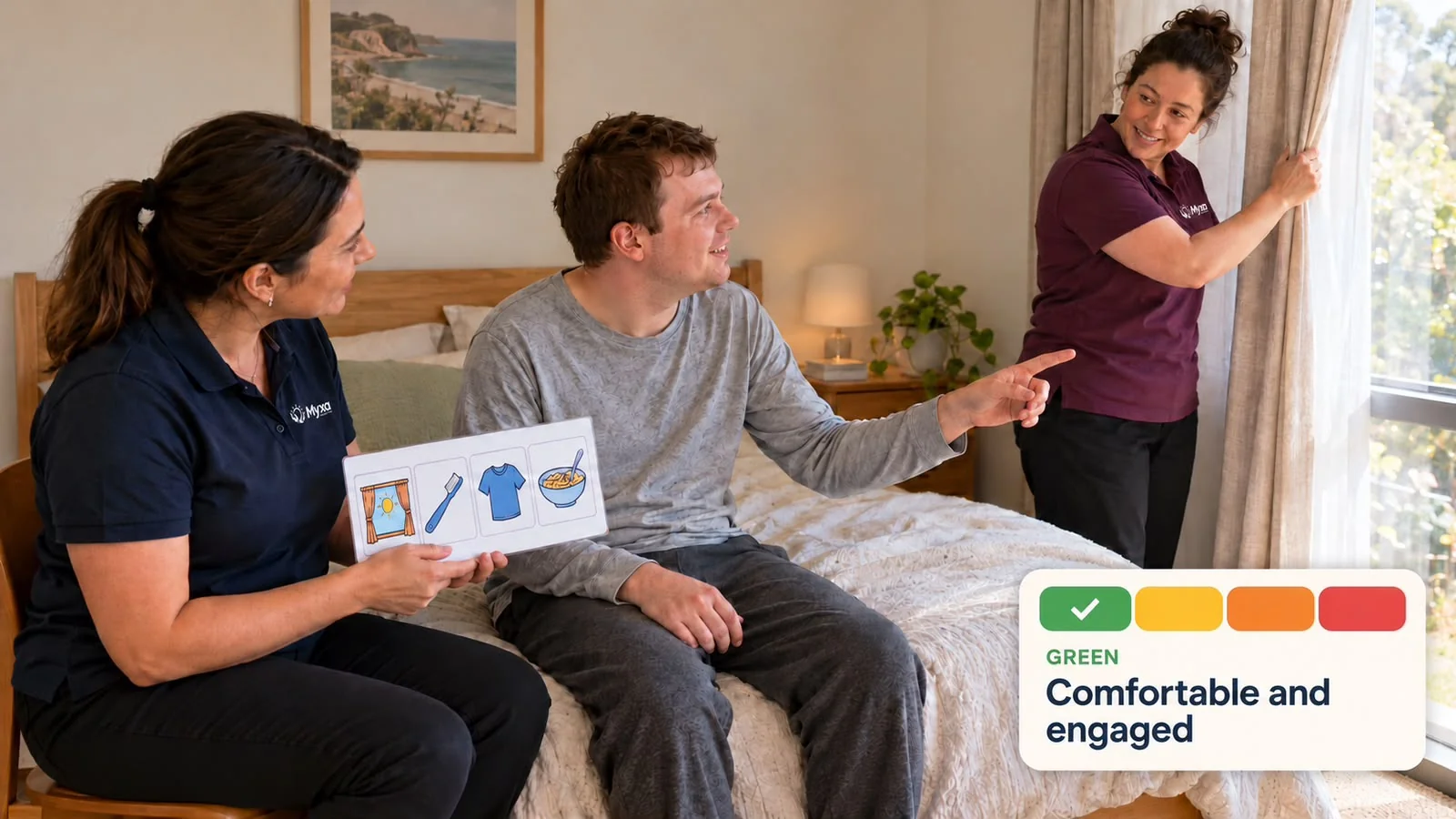
Setting · Bedroom
1Support Worker 1
Engages directly with the participant, guides the routine and responds to communication and behaviour.
2Support Worker 2
Prepares the environment, monitors for early signs of escalation and supports safety and redirection.
Why 2:1 matters here
Continence, showering, dressing and grooming can involve sensory discomfort, balance risks and behaviours of concern.
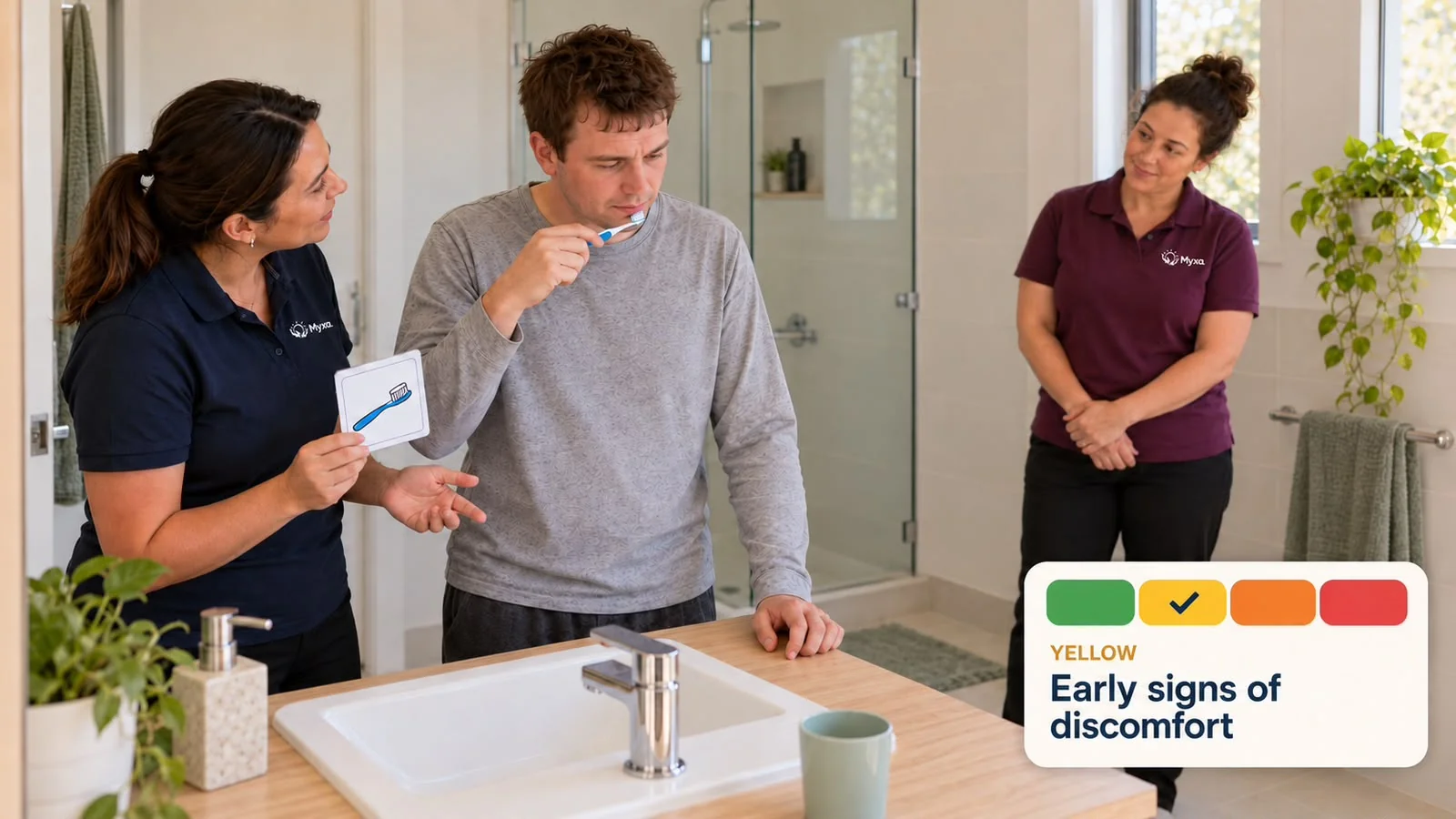
Setting · Bathroom
1Support Worker 1
Provides direct personal care and physical assistance in line with the participant’s plan.
2Support Worker 2
Supports positioning, prepares equipment, monitors risk and steps in where additional support is required.
Why 2:1 matters here
Mealtimes may require food preparation, supervision, prompting and management of behavioural or swallowing-related risks.
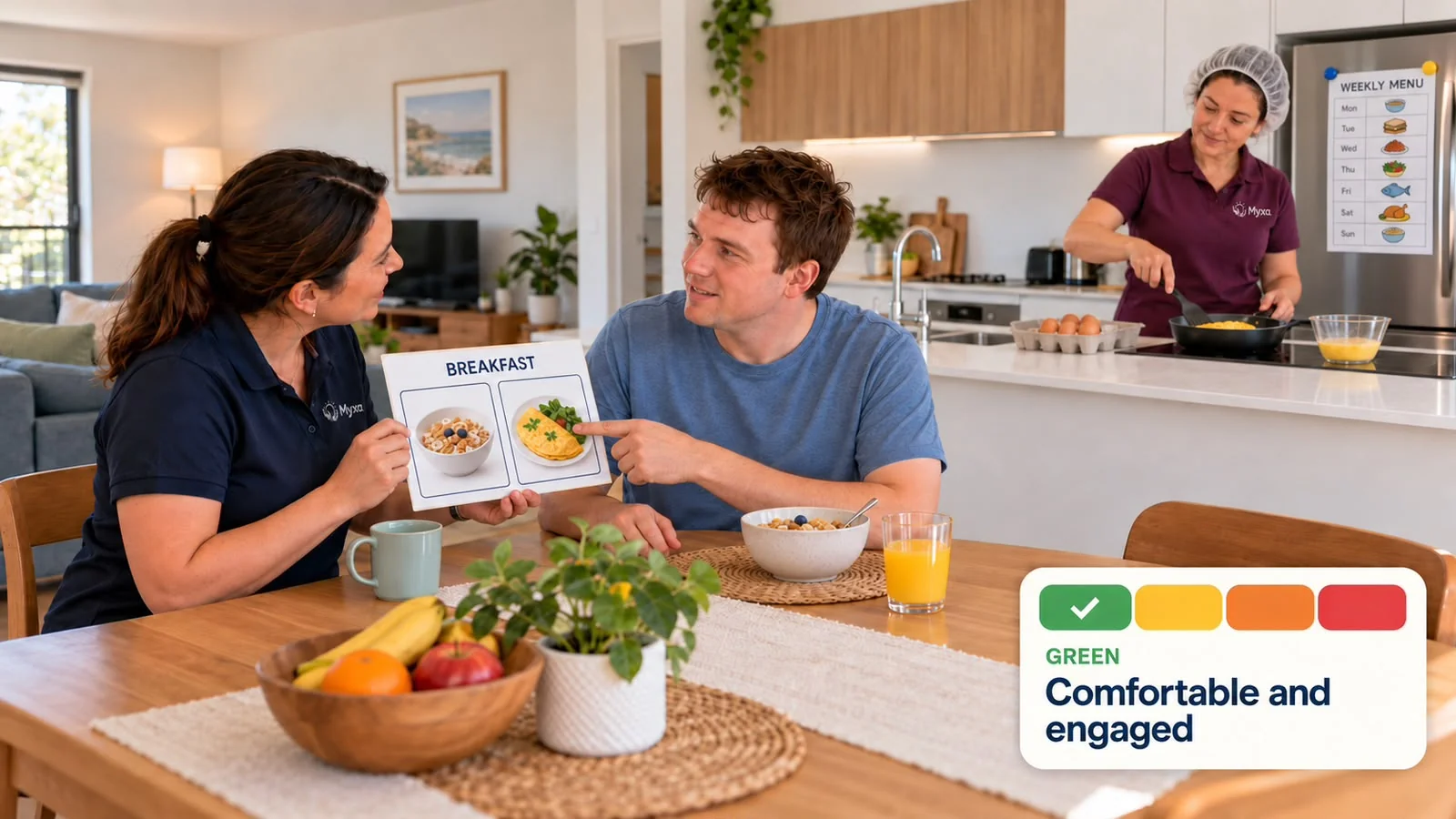
Setting · Kitchen and dining
1Support Worker 1
Stays engaged with the participant, supports participation and provides prompts during the meal.
2Support Worker 2
Prepares the meal and supports monitoring, supervision and risk management.
Why 2:1 matters here
Vehicles and public environments introduce additional risks. Staff need to monitor the participant, the environment and changes in behaviour while keeping everyone safe.
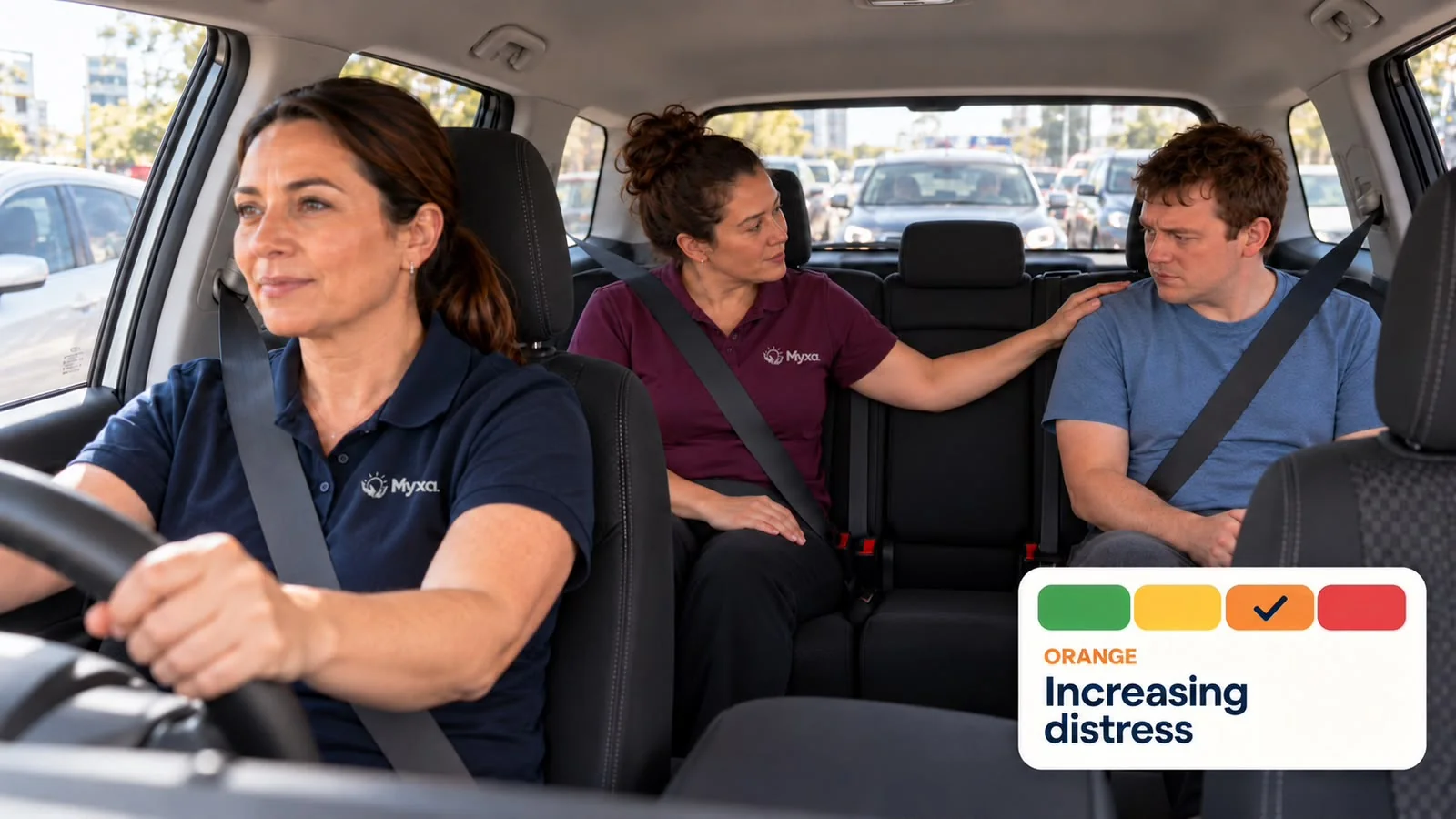
Setting · Street and vehicle
1Support Worker 1
Leads the activity or transport task and supports the participant to take part.
2Support Worker 2
Stays close to the participant, monitors early signs, provides reassurance and implements Behaviour Support Plan strategies when required.
Why 2:1 matters here
Activities such as swimming, cafés and shopping can be positive experiences when both workers know their role and can respond early if support needs change.
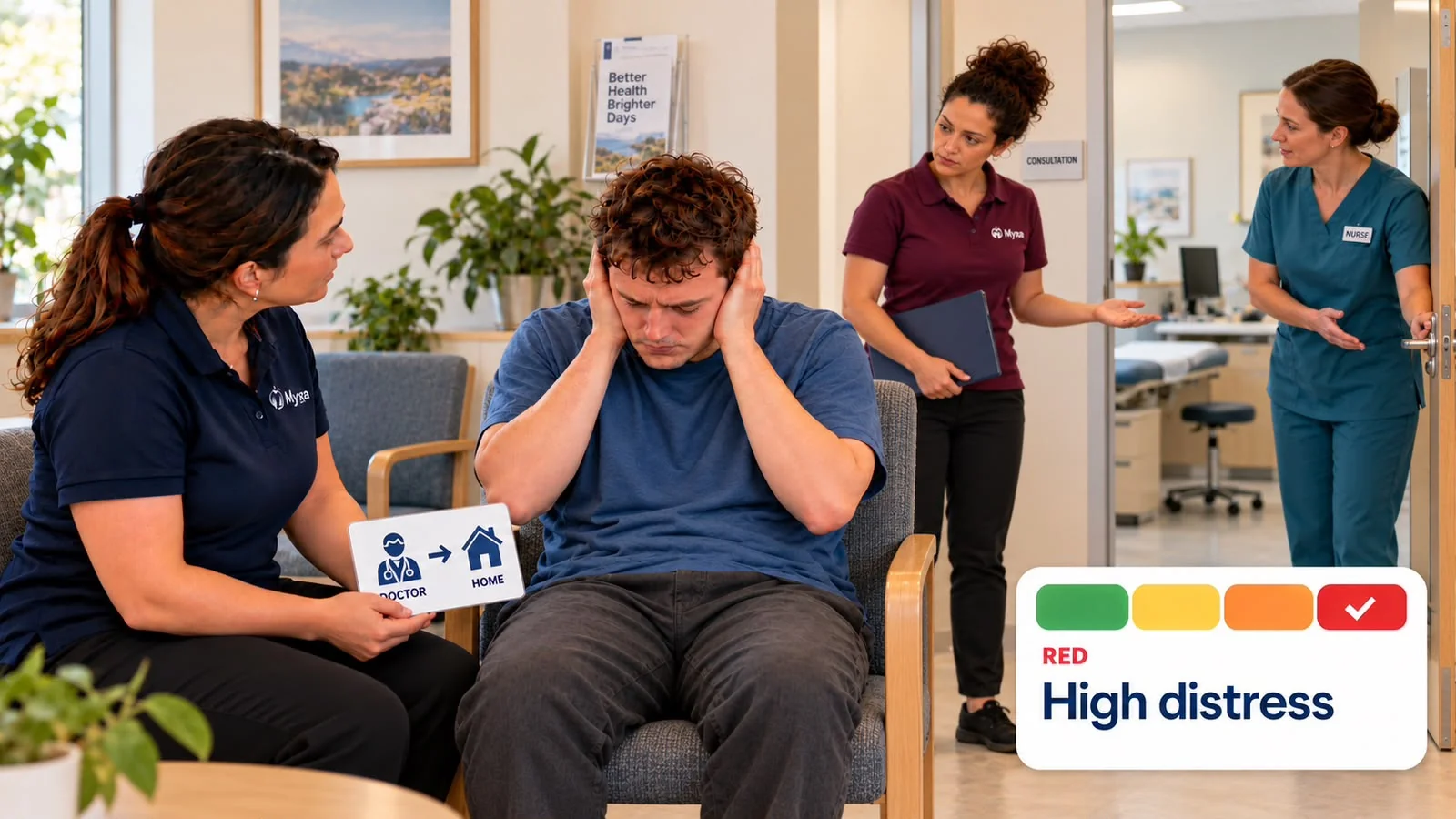
Setting · Café
1Support Worker 1
Supports the participant to engage in the activity and make choices.
2Support Worker 2
Monitors the environment, manages emerging risks and can take over the lead role if the participant responds better to them.
Why 2:1 matters here
Medication may require preparation, prompting, observation and risk management, with responsibilities clearly divided between the two workers.
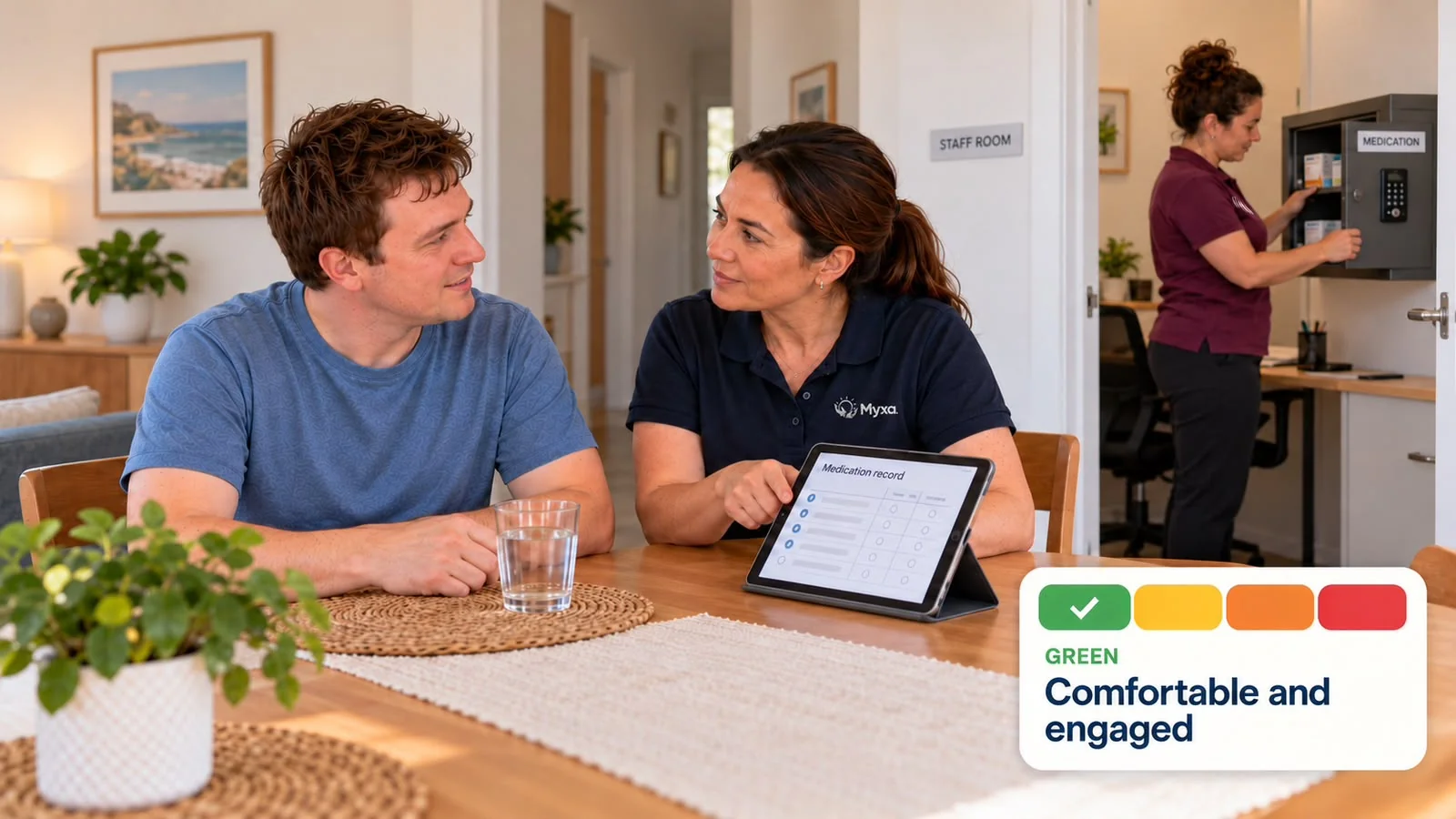
Setting · Kitchen
1Support Worker 1
Prepares and provides medication support in line with the participant’s medication plan.
2Support Worker 2
Supports prompting, observation and risk management and confirms the process has been completed as required.
Why 2:1 matters here
Evening personal care, settling and transition to sleep can require direct support, risk management and a clear handover to the next team.
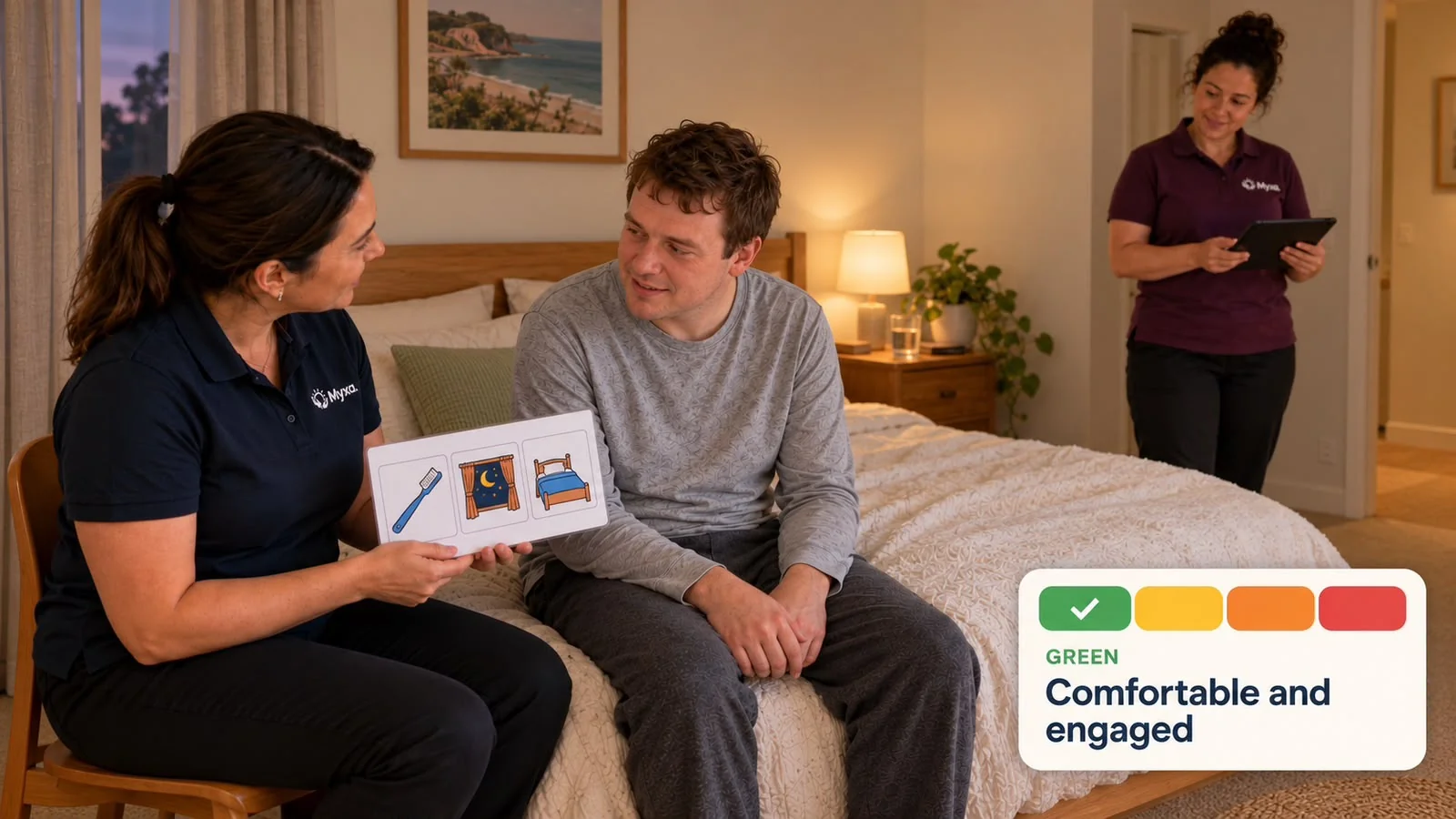
Setting · Bedroom
1Support Worker 1
Supports the participant with the evening routine, settling and preparation for sleep.
2Support Worker 2
Supports the environment, monitors risks, completes documentation and prepares the handover.

A home built for it
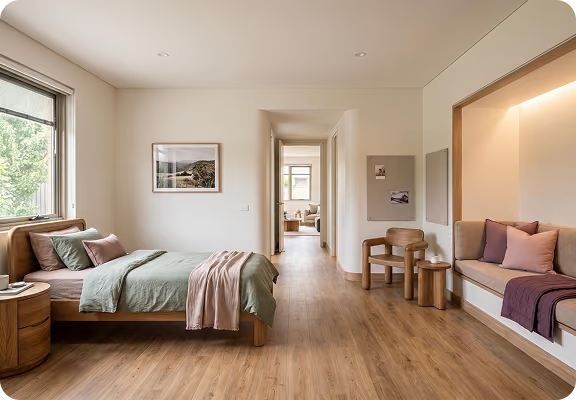
Robust SDA
Robust is one of the SDA design categories for participants who require a more resilient home environment.
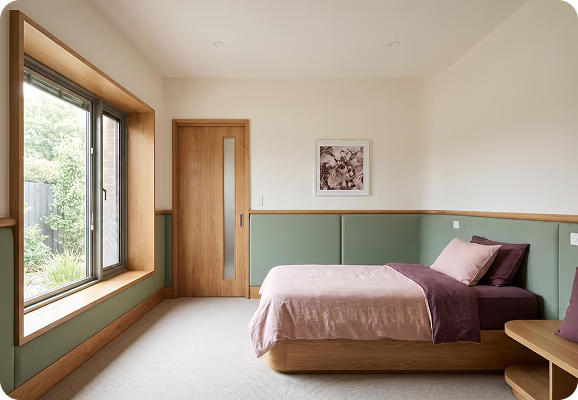
Robust Plus
Where a participant’s support needs require additional reinforcement beyond Robust SDA, Myxa refers to this as Robust Plus. We work with the property provider to strengthen particular features of the home further.
Funding.Housing and support are funded separately
What sits behind the 2:1 team
2:1 support does not work just because two workers are rostered. There has to be a structure behind them that keeps the support consistent, trained, documented and escalated properly.
- 01
Team & Rostering
A consistent team with the right experience, participant-specific training and compatibility.
- 02
Management & Practice Direction
Experienced managers guide the Support Plan, direct staff and respond when support needs change.
- 03
Data & Review
Staff record what happens, what strategies were used and the outcome so support can be reviewed and improved.
- 04
Quality & Compliance
Quality systems oversee incidents, documentation, restrictive practices, reporting and NDIS compliance.
- 05
Escalation & After Hours
Clear escalation pathways give workers access to experienced management when additional direction is needed.
Built around the person
The support is built around the individual, including how they communicate, what matters to them and what helps their day work well. This may include:
Built Around the Person
The support is built around the individual, including how they communicate, what matters to them and what helps their day work well. This may include:
- communication and how they express needs
- routines, preferences and what helps them feel settled
- cultural, family and personal relationships
- meaningful activities, interests and ordinary daily life
- how they make choices and communicate decisions
When This Program Fits
This program is designed for participants whose support may involve:
- intensive behaviours of concern and significant behavioural risk
- 2:1 or other high staffing requirements
- a Robust or additionally reinforced home environment
- restrictive practices that require careful implementation and oversight
- additional complexity such as psychosocial disability associated with mental health conditions, justice involvement or child protection involvement
The program is shaped around the support required, not a diagnosis or history alone.
Putting the arrangement together
A successful arrangement depends on more than finding a home. The housing, housemates, staffing requirements and trained team all need to work together around the participant.
01 / Home
A suitable home and location
02 / Housemates
Compatibility with existing housemates
03 / Staffing
The staffing and support ratio required
04 / Team
Availability of workers with the right training and experience
Around the participant
What to send with a referral
Share as much information as you have, including:
Behaviour Support Plan and practitioner details
Restrictive practice authorisations and PRN protocols, where relevant
Allied health reports
NDIS plan and SDA funding information, where relevant
Incident history from the current or previous setting
Communication preferences and who the participant wants involved