01
Before they arrive
We gather relevant health and clinical reports, behaviour support strategies, communication preferences, routines and other information from the young person and the people involved in their support.
The people responsible for the young person decide where they live, and the NDIA decides funding. Once the arrangement is agreed, Myxa provides the team, daily structure and disability support around them.
What the program puts around a young person:
01 / People
A consistent group of support workers matched to the young person, with new staff prepared before their first shift.
02 / Rhythm
School, meals, activities and rest built into a routine shaped with the young person and around how they communicate.
03 / Growth
As the young person grows and approaches adulthood, their support is reviewed and adapted alongside the people planning with them.
The support follows the same structure as other Myxa homes, with additional preparation around the needs of the young person.
We gather relevant health and clinical reports, behaviour support strategies, communication preferences, routines and other information from the young person and the people involved in their support.
A person-specific Support Plan is built around what we learn, including how the young person communicates, what matters to them and any Behaviour Support Plan already in place.
Support workers are matched on experience, skills and compatibility, with a House Supervisor helping keep the plan and daily support consistent.
Management, rostering facility team and after-hours escalation sit behind the support workers so the arrangement stays coordinated and the team has somewhere to turn when more support is needed.
Behaviour can communicate something important, and with young people the reason is often found in the everyday details.
Food
Preferences change as young people grow. Meals and routines should change with them rather than stay fixed around an old plan.
Communication
If a young person uses a communication book, device or visual prompts, every worker supporting them should know how to use it.
Space
Some young people need a quieter or sensory space to regulate. Where this is part of the plan, the environment should make room for it.
Growing up
Support should change as interests, skills, routines and needs change. What worked six months ago should be reviewed, not simply assumed to still fit
Meals are planned with the young person and adjusted as their preferences and needs change, with dietitian or speech pathology input where relevant.
School, training or other education is built into the young person’s routine, with support to attend and maintain the friendships and connections that come with it.
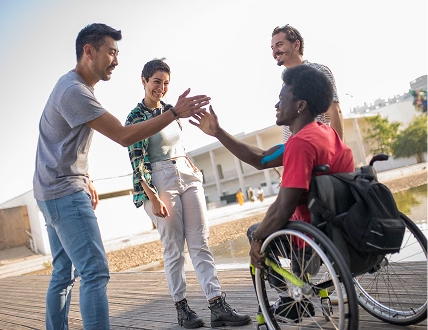
Activities are planned with the young person using the communication approach that works for them, with support to participate safely and meaningfully.
Contact with family and important people is supported where it is safe, appropriate and consistent with the arrangement in place
Many young people in this program have experienced things that shape how they respond to adults, to change and to being told no. Support starts from there.
Where a Behaviour Support Plan is in place, every worker supporting the young person completes training specific to it.
Support staff completes trauma-informed practice training and Ethical Response training. Ethical Response training prepares staff to respond to physical aggression, self-harm or property damage safely and in line with the plan.
Where a restrictive practice is in place, it is authorised and reviewed by an Authorised Program Officer under NDIS Module 2A. This includes consent, regular review and a plan to reduce its use.
If PRN medication, which is given as needed, is ever required, staff call for approval first. Every strategy in the Behaviour Support Plan has to be tried and documented.
Turning eighteen can change decision-making arrangements, NDIS supports and where the young person lives. Planning for that transition belongs to the young person and the people involved in their support.
Myxa’s role is to support the transition, share relevant information from day-to-day support and help keep the staff team consistent while future arrangements are being planned.
For some young people, the next step may be Supported Independent Living. For others, it may be a different arrangement. The next step is planned around the young person, not assumed in advance.
Explore Supported Independent LivingThe arrangement can work in two settings.
Myxa provides the disability support within the agreed living arrangement.
The home and support team are considered against the young person’s needs, staffing requirements and the existing household.

The right arrangement brings together a suitable home and a team with the right experience for the young person’s support needs
The roster is built around a consistent group of workers matched to the young person. People take leave and staff change, and when that happens the new worker is trained to the young person's plan before their first shift.
Where the arrangement allows it, and where it is safe and appropriate, yes. The conditions are set by the people responsible for the young person, and within them we will keep you informed and support the contact that is agreed.
The arrangement is reviewed with the young person and the people planning with them. Some young people move to an adult supported living arrangement, with Myxa or elsewhere. Some go home or into other housing. None of it is assumed.
Tap a card to switch it on, tap again to change it.
Speed changes apply on the next play.
Your browser doesn't support read-aloud. Try Chrome, Edge, or Safari.

We use cookies and similar technologies to make this site work, understand how it's used, and improve our advertising. See our Privacy Policy. You can change your preferences any time via Manage.